



.svg)


 Back
Back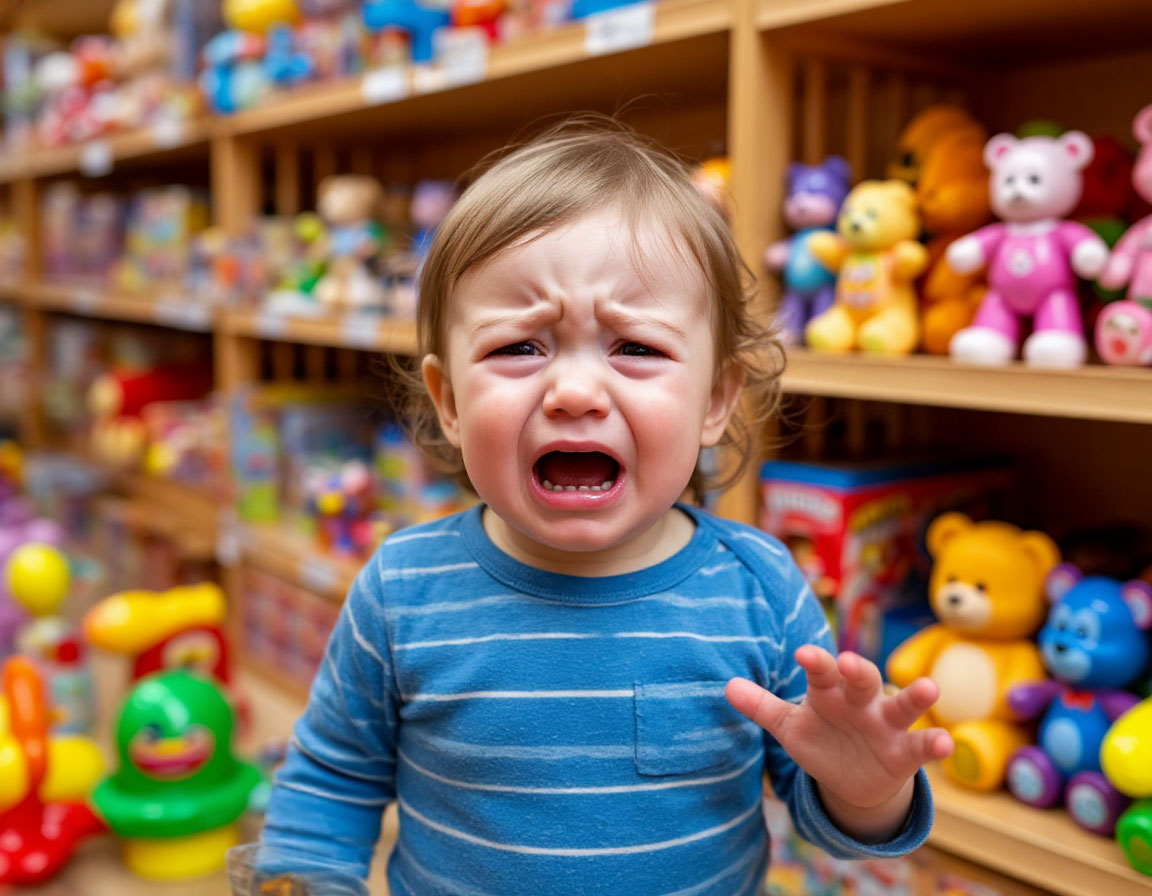
Tantrums and whims are one of the most common problems in raising children. They begin, as a rule, towards the end of the first year of life, and then comes the well-known “two-year crisis.” The causes of tantrums at this age and later can be many factors: from hidden mental problems to a banal refusal to buy a toy. In this article we will understand why children have tantrums, as well as how parents can deal with them.
Tantrums in a child: psychological reasons
Children's tantrums can have many reasons. It is generally accepted that they are based on strong emotions that the child is unable to restrain or express. Most often this is anger, for example, in response to a refusal to buy a toy or chocolate. Sometimes hysteria is based on anxiety and fear, then panic becomes simply uncontrollable.
Here are some of the most common causes of tantrums in children:
●Overexcitement
Most often, tantrums in young children occur precisely because of physical or psychological stress, for example, before bed. This is because the nervous system is still poorly developed.
●Hysteria in response to refusal or difficulty
Occur because the child feels disappointment and injustice. However, he has not yet learned to control himself fully.
●Hysteria as a way to get what you want
May not be a sincere emotional reaction, but a way of manipulation. Most often, parents reinforce this mechanism by making concessions so that the child calms down.
The reasons for hysteria lie in many factors. A child's behavior is influenced by a child's temperament, characteristics, and developmental stage. For example, that same “crisis of two years,” when a baby begins to refuse literally everything and even do something “out of spite,” speaks of his normal psychological development. This is simply a stage at which the child recognizes himself as an individual and learns his boundaries.
Children's tantrums: how does the brain work at this moment?
Very specific parts of the brain are responsible for breakdowns and hysterics. It is useful for parents to understand this: this way we realize that the child is simply not capable of reacting differently in some situations. And partly due to physiological immaturity.
Tantrums involve the amygdala, which processes emotions such as fear and anxiety, as well as the hypothalamus. It controls unconscious functions: heart rate and temperature. It all starts with the amygdala, and then the hypothalamus decides how to deal with the signals using cortisol or adrenaline.
Sometimes children, unlike adults, are simply unable to calm down. The prefrontal cortex helps adults find a logical way to respond to a stressful situation. And the thing is that in children it is still poorly developed, and inhibition and impulse control are among its most complex functions. Moreover, the formation of the prefrontal cortex continues until adulthood. That is why asking a child to calm down is sometimes simply pointless.
How should parents behave during a child’s tantrum?
It is quite difficult to correct a child’s behavior, but the behavior of parents and changing the environment are quite accessible methods. And here are some useful tips.
1. Take control of your own emotions
Before helping a child cope with a tantrum, parents need to take control of their own emotions. Otherwise it might turn out even worse. Therefore, if at the moment of a child’s hysteria you feel that you yourself cannot cope with anger, try going to another room for a few minutes and exhale (if the situation is not dangerous for the baby). Or ask your partner to get involved in the situation for you.
2. Control your child's reaction
● Maintain eye contact. This shows that you are listening and engaged.
● Remain calm and have a soft tone of voice. This will help reduce anxiety, and the amygdala will begin to send signals that there is no danger.
● Stimulate self-soothing skills with tactility. For example, give him some play dough, ask him to push a wall, or take a few slow breaths. It is best to use such techniques before the hysteria begins.
● If the tantrum started in response to a refusal, do not change your decision. Say “no” firmly.
● Do not forcefully grab the child in your arms, do not lift him from the floor during moments of hysteria.
● Remove potentially dangerous objects from the child’s reach.
● Give your baby time to express his emotions by staying close.
3. Talk after the tantrum
After the tantrum is over and the child has calmed down, it is important to discuss what happened. Talk about what happened, make it clear that you noticed how strong the child's emotions were. Calmly explain that you understand how much the child wanted something and why you refused if the hysteria happened because of a ban. And, of course, make it clear that you love the child and are still nearby.
When to contact a specialist?
Sometimes the causes of hysteria can be hidden in health problems. In such cases, it is important for parents to seek help from specialists. Here are some symptoms that may indicate the need to see a doctor:
● Tantrums happen several times a day and last more than 15 minutes.
● During a tantrum, the child shows aggression: he seeks to harm himself or others.
● Disturbing physical manifestations. For example, holding your breath, vomiting or even convulsions.
Don’t be afraid to ask for help, even if you just feel like you can’t cope on your own.
A child’s tantrums are a complex and at the same time very important stage of growing up. This is how the baby learns to understand and control himself, realizes that expressing emotions, even negative ones, is safe. And the task of parents is to understand the child and stay close in the most tense moments.