



.svg)


 Back
Back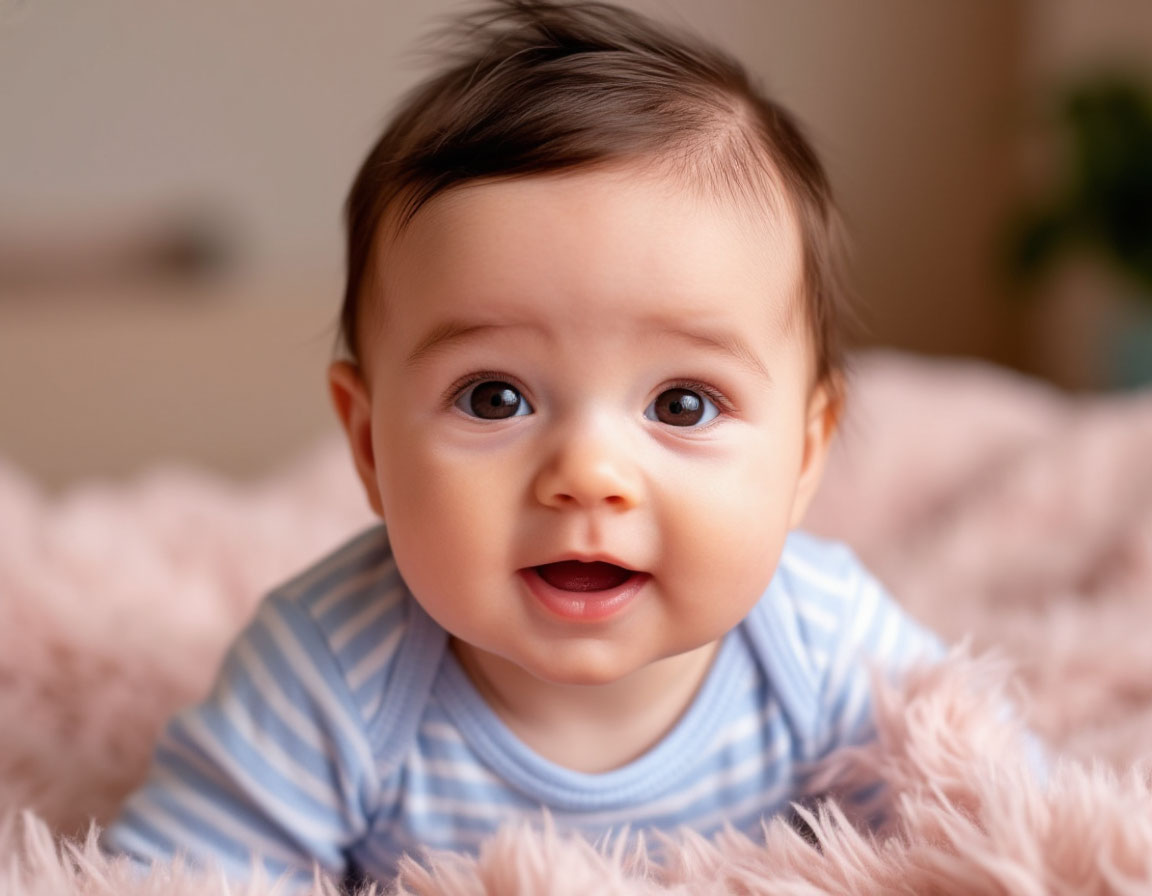
A newborn baby is ready to communicate from the first days of life. At the same time, babies give most signals to their parents through crying - this is the main way of expressing desires, well-being, and mood. Other sounds are also included, as well as facial expressions and body movements. But what are newborns able to understand when we communicate with them, and also how exactly do they talk to their parents?
How do babies talk?
From the very first day of life, children begin to communicate with others - they are literally born with social skills. Studies have shown that newborns prefer to listen to human voices instead of the sounds of the outside world and look at people's faces.
In the first weeks of life, newborns do not have many ways of expressing themselves - mostly crying and moaning. With their help, babies talk about everything they feel: hunger, colic, fatigue. Over time, parents already understand the tone of crying and determine its causes.
Very soon, by the third month of life, children begin to make a new sound - “aha”. This is a good signal. With the help of cooing, the baby expresses positive emotions, this is how he responds to the speech of his parents. And also the stage of cooing - training the speech apparatus, preparing for the pronunciation of the first syllables, and then words. Over time, the agushes will begin to change intonation and volume, and high and low screams will appear. This is how the baby explores the possibilities of his sound.
What can children say without sounds?
Newborns actively use facial expressions and movements when communicating with their parents. So they seem to hint at what they would like to receive. Usually babies give signals first through movements and gestures, after which crying follows. Attentiveness to such hints helps parents a lot.
And although all children are different, there are some typical signals.
The baby is rubbing his eyes and face - he is tired and wants to sleep.
The baby is actively moving his legs, his face is red - perhaps the baby wants to burp or he is upset, asks him to calm him down.
Eyes wide open and a small round mouth - it's time to play.
The baby bites his lips and puts his fingers in his mouth - he is clearly hungry.
The child turns away - he is tired and wants to stop playing or any other activity.
How do newborns understand speech?
Surprisingly, children begin to learn speech literally from the first day of life with the help of their mother’s voice. Soon after birth, babies are able to distinguish their mother's voice from others - because it soothes them.
The rhythm and sound of parents’ voices are very useful for the baby, they help to recognize and distinguish languages. As scientists have proven, children at the age of two months are already able to distinguish their native language from others. But in addition to sounds, the parents’ facial expressions are also important in this process.
Newborns learn language by paying attention to their parents' facial expressions. They look at the movement of the lips, the openness of the mouth, and the position of the tongue. By the way, when a six-month-old child smiles or frowns at the sound of speech that is unfamiliar to him, this is how he expresses his surprise. This means that the child has already learned to recognize his native language.
How do newborns establish contact with their parents?
Babies love to look at their parents’ faces, listen to their voices and even coo in response. This is how the development of communication between the child and adults begins, and this stage lays the foundations of linguistic communication.
About the third month of life, children begin to smile. And with a smile comes the opportunity to exchange emotions with adults and maintain prolonged eye contact. The brightness of emotions after this discovery will only increase. By the sixth month, the child will already react differently to different family members.
Over time, more and more gestures and movements appear, eye coordination improves, and sounds are added. And then the ability to coordinate one’s actions develops, for example, pointing a finger at desired objects.
How to help your child develop speech and communication?
When the baby begins to actively coo, parents need to engage in dialogue. This period is important for the development of speech - the baby is about to pronounce the first syllables, and then words. But how can you help?
Keep your baby’s attention
If a child shows interest in something, try to catch this moment and join the “dialogue” using words and gestures. This increases motivation to communicate and helps establish a connection between the object and the words of adults.
Repeat the sounds the child makes and his facial expressions
This way the child can understand what has a communicative effect and what does not.
Speak “motherly”
When communicating with a child, we speak differently: we draw out consonants, speak more slowly, and use animated facial expressions. It's actually useful. Speech directed specifically at the child helps learning.
Translate from “children’s”
Children often express their emotions or desires without words, but parents are able to understand them. At such moments, say in words what the baby wanted to express. This not only helps speech, but also helps strengthen the emotional connection - it means the baby is important and is heard.