



.svg)


 Back
Back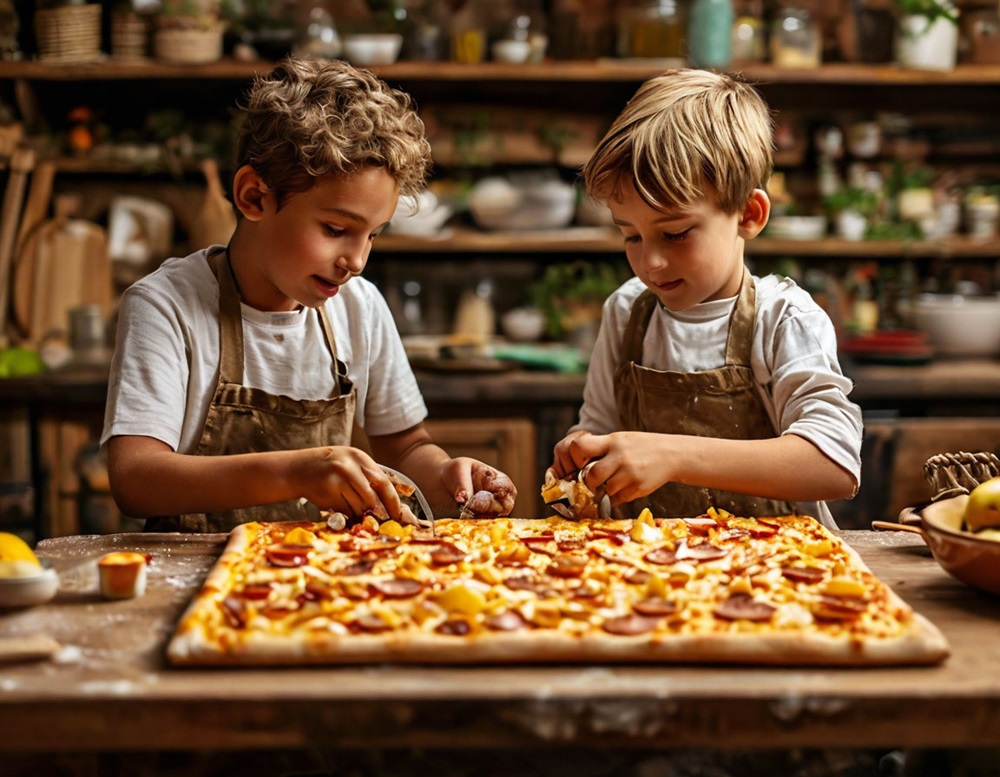
Is the kitchen not a place for children? But no, we say. Cooking with your child is fun and even beneficial for the baby's development. Cooking simple dishes or participating as much as possible will help the child develop fine motor skills, logic, tactile and taste perception. And this is another reason to spend time together, become closer, show the child that he is important and contributes to the common cause.
When to start teaching your child to cook and how to make the process truly interesting – advises YokoSun.
When should you start teaching your child to cook?
-
First steps (3-4 years)
You will be surprised, but a child can start taking his first steps in cooking as early as 3-4 years old. Naturally, we are talking about simple actions like mixing products with the help of adults - away from sharp objects, fire and other dangerous elements. For example, your baby can stir the ingredients if you hold the bowl. Or arrange the ingredients on the table in the order in which you will use them while cooking.
Of course, you can handle all this better and faster yourself, and cleaning up later will be easier - but there are many more advantages to involving your child in the process than inconveniences. For example, the child will gain the skill of teamwork and understand that a chain of actions leads to a result. In addition, at this age, children begin to gradually separate themselves from their parents, and sometimes even demand independence. Don't suppress this need - on the contrary, encourage them to discover new things and let them make mistakes.
-
Little helper (4-7 years old)
A child can become a real helper in the kitchen at the age of 4-7 years. At this stage of development, children acquire coordination skills, confident fine motor skills, the ability to analyze and strive to be useful.
Children actively demonstrate creative abilities, and you can find a way to express them in the kitchen. For example, entrust table setting or dough sculpting. Together you can decorate the table for a family holiday: choose serving napkins or ask your child to color them the way he wants. Make fancy-shaped cookies, bake a pie or pizza and let your child arrange the ingredients. Be sure to place the resulting dish in the center of the dining table so that all family members appreciate the child’s efforts and praise him.
Preschoolers can also handle cleaning up after a family dinner. Have your child collect the dishes, place them in the sink, and rinse them before putting them in the dishwasher.
-
Beginner cook (7-10 years old)
Children 7-10 years old are already fully trained at school and by this age they not only have an idea of what a sequence of actions is, but can also follow it. Therefore, elementary school students are able to prepare a simple dish from start to finish on their own. For example, boil an egg or pasta.
Create an atmosphere of ease, do not make the child feel that helping parents in the kitchen is a burdensome duty. Very often, the first grades of school, due to an excess of new impressions, become a difficult period for children: they feel quickly tired and stressed. Use time in the kitchen as an opportunity to bond and do something enjoyable.
Children 7-10 years old actively begin to attend clubs and find hobbies. If you can instill in your child an interest in cooking at this age, it is likely that he will retain pleasant memories and skills throughout his life.
-
Real chef (10-13 years old)
From the age of 10, under adult supervision, a child can be trusted with a knife and other sharp kitchen utensils. He is quite confident in using a microwave, stove and other appliances. And this means that it’s time to prepare complex dishes.
In addition, a child at this age can help you both in the kitchen and outside it. For example, going to the grocery store on your own.
It happens that raising children 10-13 years old is difficult for parents. A child at this age is no longer a baby, but not yet an adult. This period marks the peak of emotional instability due to hormonal changes. Children begin to literally demand freedom and sometimes even rebel against their parents’ decisions. It is important to be there at this moment, to show your love, but to give the opportunity to make independent choices - even in the kitchen.
How to have fun in the kitchen?
The more positive emotions the child receives, the better he will learn the skills. Here are some rules that will help you spend your time cooking fun and useful.
-
Safety comes first
The most important thing is to ensure the safety of the child in the kitchen. Do not trust small children with sharp, hot objects. Talk to your child in advance and outline the rules of behavior. Do not come up with strict “rules of the game”; rather, explain how to use objects correctly and why it is important to be careful. Supervise your child while he or she is participating in meal preparation.
-
Not an obligation, but an opportunity to make a contribution
Do not force your child to help you in the kitchen. So he may completely lose interest in cooking. Ask them to do something on their own, make them feel like an adult. Be sure to thank them for their help, even the smallest one. Showing that your child's efforts are important and their contributions are visible will create positive memories and build self-confidence.
-
The kitchen is a place for creativity
Nothing stimulates interest more than the opportunity to show creativity. Let your child be creative in the kitchen, even if you then have to deal with the unpleasant consequences of spilled flour or grease stains.
-
Don't forget that this is a child
Cooking together can require patience. Don’t forget that for a child, the process of cooking is another way to learn about the world around them, gain skills and express themselves. Play, create and have fun together. This is how you can become a guide to the new world for your baby, a friend in the kitchen and beyond.