



.svg)


 Back
Back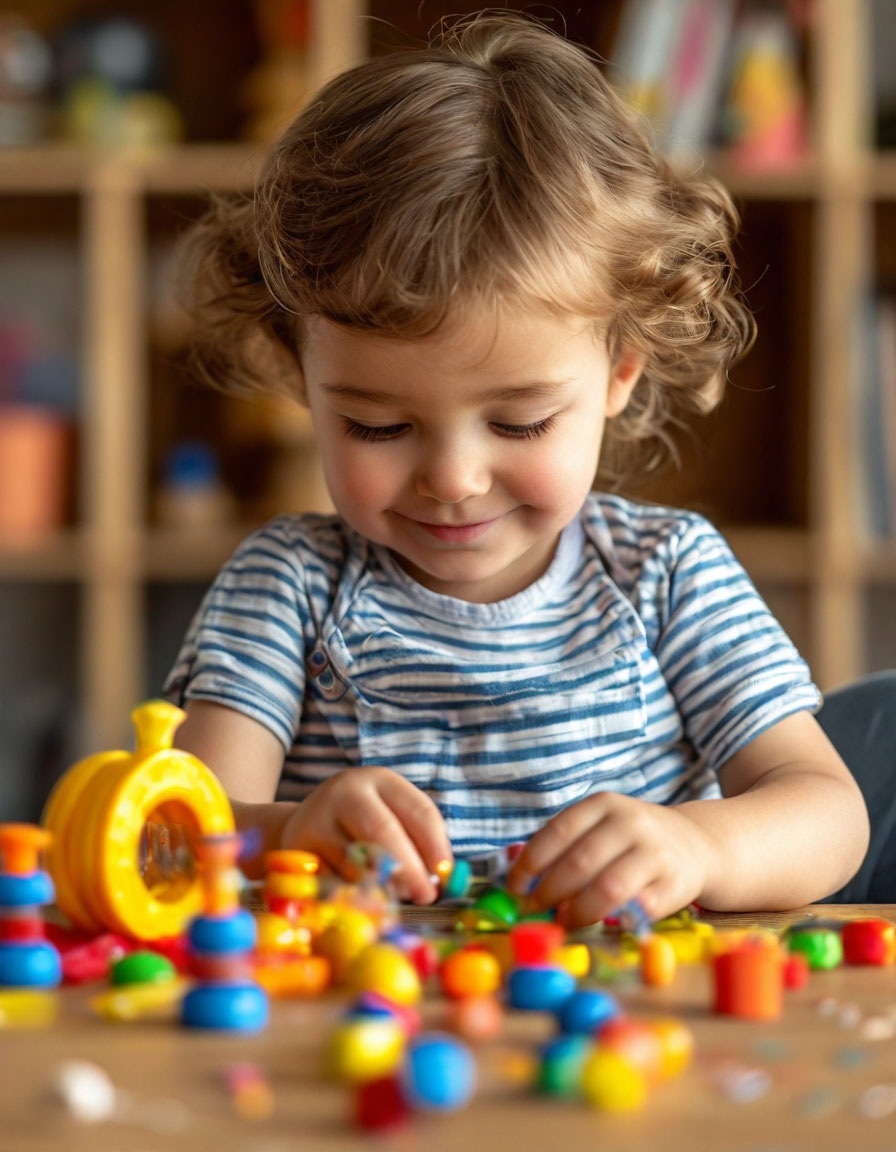
Fine motor skills play a much larger role in a child’s development than you think. This is not just the ability to brush your teeth or pick up a pencil. Scientists have come to the conclusion that finger and hand skills affect the formation of a baby’s speech and even his psyche. In this article, YokoSun explains why to develop fine motor skills in a child, as well as how to do it in the form of a game.
What are fine motor skills and why is it important to develop them?
Many people are familiar with the very concept of fine motor skills. Simply put, it is the ability to perform precise and small movements with the fingers, hands and feet. Several systems in the human body are connected to such actions at once: from the muscular to the nervous.
Fine motor skills play a special role in a child’s development. It directly affects the formation of the baby’s speech. The thing is that in the brain the motor and speech centers are in close proximity to each other. Because of this, the work of the motor center triggers the development of speech skills. It's simple: in order for a child to start speaking in a timely manner, you need to develop the ability to use your fingers.
Fine motor skills also affect thinking, memory, attention, vision and even the nervous system. If it is poorly developed, it will be difficult for the child to absorb new information and concentrate.
And, of course, such skills give confidence. If a baby can brush his teeth on his own, eat soup with a spoon, and perform more difficult movements, he feels independent.
What do you need to know about the development of a child’s fine motor skills?
Fine motor skills begin to develop from the first months of a baby’s life: at first he simply looks at his fingers, raising his arms up, then learns to bend them.
It is believed that normally a one-year-old baby should be able to point to objects with a finger, reach out to be picked up, hold and extend light toys, and also pinch with the thumb and forefinger. Already at three or four years old, a child can independently drink from a cup, eat, draw, fasten buttons, sculpt simple figures from plasticine and even cut paper. It is important to remember that the development of many skills may vary from child to child.
Educational games should be age appropriate. For example, a child under one year old grasps various objects due to a reflex. Try giving him toys of different shapes, materials and sizes. For children under three years old, suggest separating some small objects from others: cereals, pebbles, shells. A three to five year old child can be trusted with clothespins and buttons, while preschool children are already busy drawing and sculpting.
At first the movements seem awkward, but over time the child will be able to control his body better and better. However, it is important that classes to develop fine motor skills are constant, only then will they bring results.
As in any other education, you should think about ensuring that exercises to develop fine motor skills engage the child. Perhaps he will like some household chores - children, starting from the age of three, actively imitate adults. And many chores develop fine motor skills, such as squeezing a rag or hanging laundry.
Simple exercises for developing fine motor skills in children:
-
Lacing. Playing with laces and strings will help prepare your hand for writing.
-
Building a house out of sticks. During the game, the child also develops spatial thinking.
-
Assembling a necklace from beads. The activity has a good effect on the development of speech and logic.
-
Drawing and modeling. In addition to fine motor skills, it stimulates the imagination.
-
Playing with sand. They also develop tactile sensations.
-
Paper and mosaic applications. Stimulate memory, develop perseverance.
A selection of interesting experiences for playing with your baby:
Game-based exercises are perhaps more effective. They do not become routine and boring, and playing together brings you and your child closer. Here are some fun activities that will not only keep your little one entertained, but will also help develop fine motor skills.
1. Shadow Theater
Will be a great idea for a fun and cozy family evening. You can put on a real performance, for which you only need darkness, one light source and an improvised stage in the form of a wall.
You can use your own palms and fingers to create characters. With older children, think about the characters in advance and cut them out of paper together. Glue them to your fingers and start the show. Complete the production with music and exciting plot twists with your child.
2. Pig in a poke
Another activity that can become a good family tradition. All you need is a fabric bag and items that can be filled with it - small in size and different in texture. Ask your child to close his eyes and take the contents out of the bag, guessing what is in his hands.
Anything is suitable for filling: a cube, a coin, a tangerine or wrapped candies. You can also add small nice gifts for the child there. For example, a new dress for a doll, a small car and other things. This way the game will also give you pleasant memories.
3. Cooking for the whole family
Many parents often neglect games in the kitchen. Yes, this is a dangerous place for a child in many ways, but with adult supervision and a positive attitude, cooking together will not only be safe, but will also develop fine motor skills, logical thinking, and allow the child to feel like an important part of the family.
Together you can make fragrant cookies. Working with dough perfectly develops finger and brush skills, tactile sensations and imagination. Finally, ask your child to peel a boiled egg - this exercise trains pinching skills and is suitable even for children two or three years old.
Scientists have proven that fine motor skills directly affect the development of a child, especially his speech. Therefore, it is important to pay attention to movements in which the muscles of the hand and fingers will compress, stretch and relax. Experts advise performing such exercises no more than 5-10 minutes a day. And with a creative approach, activities for developing children's fine motor skills can become enjoyable, fun and bring parents and children closer together.
A selection of interesting recipes for cooking together with your baby:
https://t.me/YokoSun_family/793