



.svg)


 Back
Back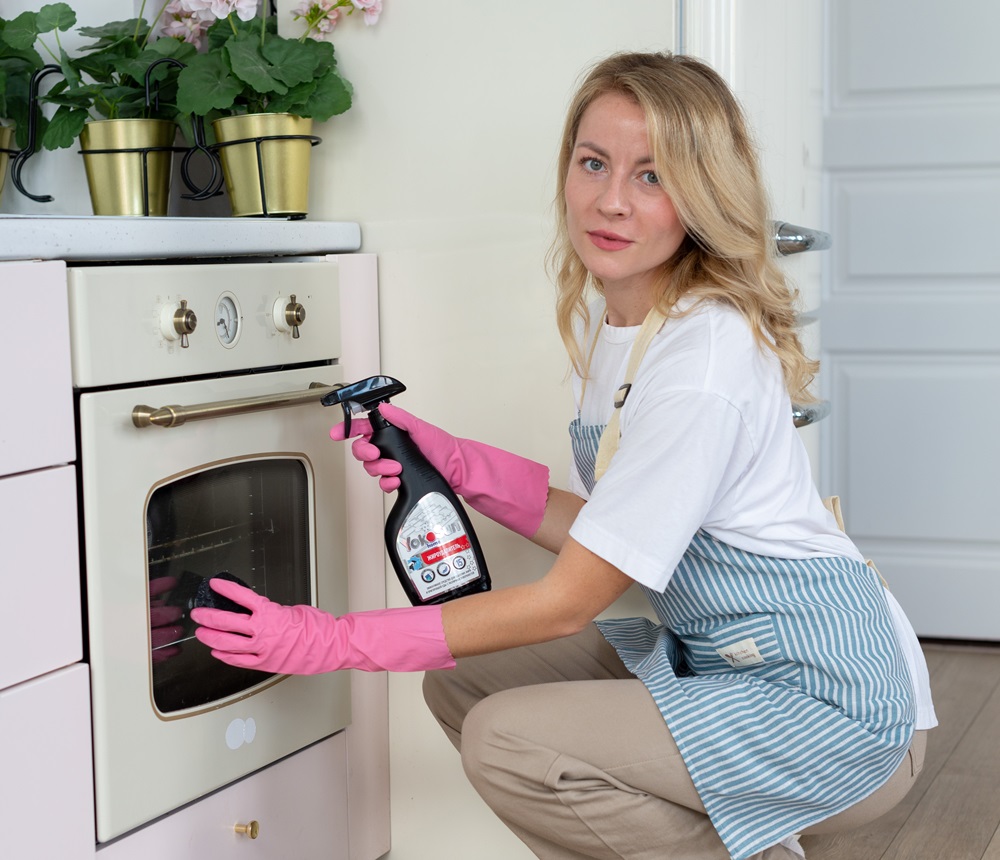
Modern household chemicals make caring for your home much easier, especially when there are suitable cleaning products for every surface, household item and room. True, this variety can create difficulties: without knowing the subtleties of application, you can do harm - for example, spoil the non-stick coating or, worse, harm your health.
The YokoSun brand has prepared a selection of common mistakes when using home care products that are best avoided.
1. Clean with your bare hands
First and most obvious: when cleaning, it is better to stock up on a pair of gloves. There are several reasons for this. The most understandable of them is that gloves can protect the skin from chemical burns when using aggressive agents. Dermatologists name another reason: hot water can be harmful to the skin. The fact is that high-temperature water quickly washes away natural oils from the skin, which protect it and make it elastic.
Wearing gloves lowers the risk of picking up bacteria when washing the bathtub, toilet, sink and floor. In the end, the manicure will “live” longer with gloves.
2. Chemically before cleaning or washing
To achieve a wow effect, some housewives decide to mix different cleaning products. Sometimes substances that are not intended for this purpose are used. So, mixing bleach with alcohol, ammonia or vinegar is definitely a bad idea. In these cases, chemical reactions occur that are dangerous to your health. And even harmless combinations (of which there are few) may not work well and simply ruin the surfaces. Therefore, the general rule is not to combine any household cleaning products.
Trust one effective product. For example, YokoSun's grease remover independently copes with even old dirt and soot - just apply the product for 15 seconds. It also does not leave scratches and gives surfaces shine.
3. Getting carried away with fabric bleaches
Bleach can ruin clothes if used for other purposes, not diluted with water, or used in too large a volume. In the latter case, they gradually dry out the fabric, shortening its service life. Bleaching agents should not be used on items made of wool or satin. This is because some bleaches contain chlorine.
Pay attention to the composition. So, YokoSun Bleach-Stain Removeris produced without chlorine, based on hydrogen peroxide. The product is suitable for all types of fabrics and copes with stains from greenery, blood and tea. This bleach can also be used for newborn clothes.
4. Ignore old stains on the floor
Often, persistent and noticeable stains form on the floor, especially the kitchen floor. Over time, they will become increasingly visible, and the chances of getting rid of them will rapidly decrease. Then there is only one way out - to change the floor covering.
To avoid such problems, for example, with linoleum, it is enough to soak the stain in time. Preferably with a special product, for 20 minutes (here you should also not experiment by mixing different substances). Floor gel will not only cope with cleaning more effectively, but will also simplify cleaning by getting rid of germs. CleaningYokoSun floor cleaner also eliminates unpleasant odors, does not require rinsing with water, and can be used not only for linoleum, but also parquet, laminate, tiles and stone.
5. Use aggressive chemicals for non-stick cookware
Such dishes are much less wear-resistant than they might seem. One awkward move may result in you no longer being able to use it. The most common mistakes are washing with aggressive or abrasive cleaning agents. They will certainly remove stains, however, there is a high risk that together with the coating.
Therefore, it is better to use gentle products, without chlorine and phosphates. YokoSun Gel not only protects dishes, but also works in both cold and hot water, helps eliminate food odors and makes dishes shine.
By the way, sudden temperature changes can also cause harm. Therefore, immediately after using it on the stove, it is advised not to place non-stick cookware under cold water.
6. Do not take care of equipment
In particular, a dishwasher. A white coating may appear on the dishes, and food stains may be harder to remove. The reason may lie in hard water, which causes calcium and magnesium salts to settle on surfaces. Modern dishwashers have a built-in decalcifier to soften water, but this may not cope well over time.
To avoid the problem, use special salts for dishwashers. They prevent the formation of scale and plaque. YokoSun Saltcan be used for all types of equipment. The product will provide more economical consumption of detergents, and the salt itself is used once every 2-3 months.
Toilet bowl cleaners are most often made based on chlorine and alkali. In general, they cope with their tasks - they rid the sink of bacteria. But if you are dealing with rust or urinary stone (a crust that forms due to insufficient care), such products are unlikely to provide the desired effect.
Acid can deal better with such stains, as with ordinary limescale deposits. For example, gel from YokoSun contains hydrochloric and citric acids, which act in a few minutes, and the gel will not damage the enamel.
8. Mirrors: too much product
Smudges on mirrors probably do not irritate only the most inattentive. The most common mistake when caring for such a surface is using too much cleaner and water. Divorces are guaranteed.
Most often, cleaning products do the job with a moderate spray. Therefore, a dispenser is provided for YokoSun products, which will ensure economical consumption. There will definitely be no streaks or smudges left; the product does not require rinsing with water both before and after cleaning.
For guaranteed results, pay attention to your movements. There is no need to wipe the mirror from side to side; it is best to draw figure eights with a napkin.
9. Thinking that a large package will last a long time
The larger the packaging, the longer you will use the product. Unfortunately, this statement is broken in everyday life. Firstly, psychology works: the larger the package, the more you use the product, thinking that there will be a lot left.
Secondly, when it comes to household chemicals, most often it all comes down to the concentration of active substances, and not to volume. You need to look at the manufacturer's recommendations for use and composition. For example, the consumption of YokoSun washing gel is 1-2 caps of 25 ml per wash, which provides up to 45 washes in one package.
10. Use regular chemicals in a home with children
Molecules of household chemicals can accumulate in the body, which can lead not only to acute allergic reactions, but even asthma. Therefore, in a house with small children, it is better to use safe products, especially when it comes to cleaning the children's room, dishes and washing the floors.
All detergents use surfactants - surfactants. They can be aggressive or safe. For example YokoSun children's room cleaner, without chlorine and phosphates, can be used even in the presence of a child. The product will cope with marker marks, milk stains or baby purees.