



.svg)


 Back
Back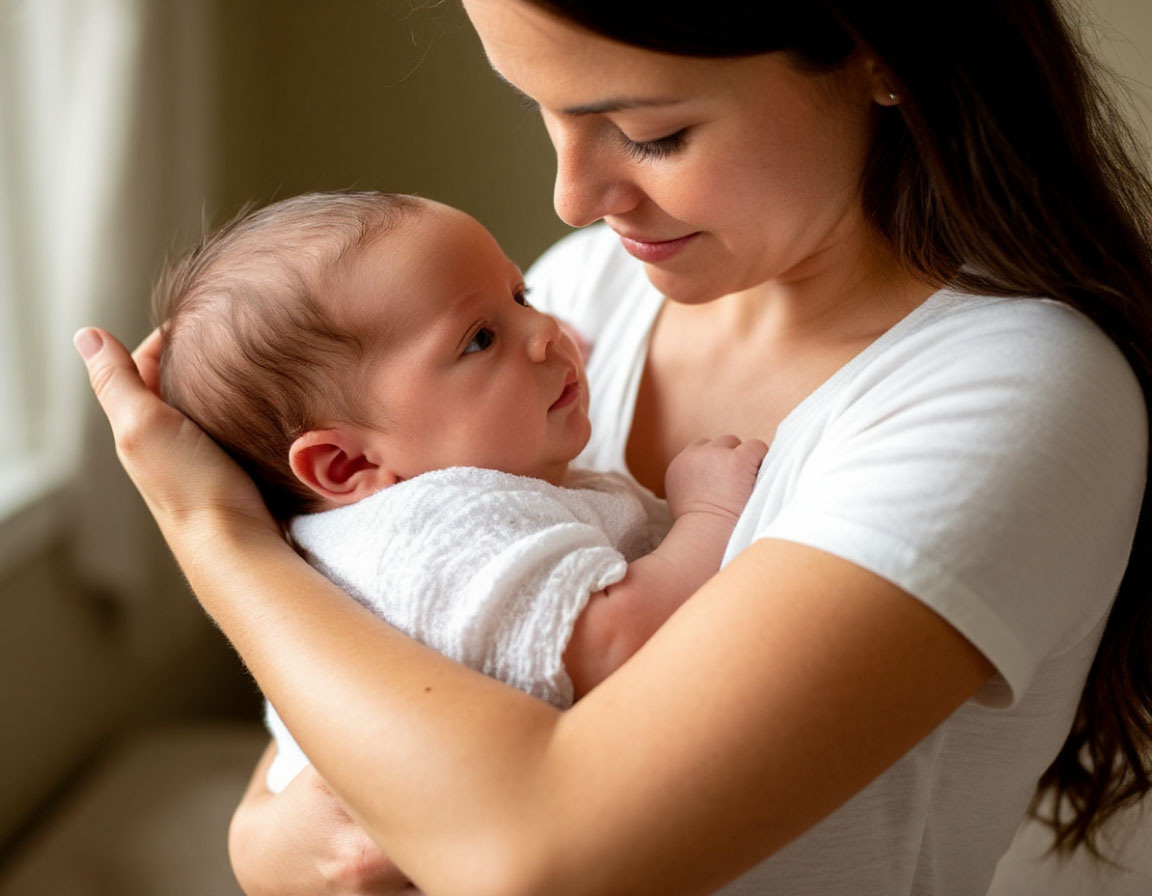
The skin of babies is very different from yours and mine. She is tender, pink and so velvety. But at the same time, it is sensitive, susceptible to damage and even infections. What exactly is the difference between the skin of newborns and the skin of adults, do babies sweat, and what is diaper dermatitis? Let's look at the facts about babies' skin that every parent should know.
How does the skin of babies differ from the skin of adults?
Our skin is multi-layered, just like that of babies. However, the significant difference is precisely how developed these layers are. For example, the top layer of skin, the epidermis, is 1.5 times thinner in infants than in adults and consists of only three layers (instead of five). The layers of the epidermis are loose and poorly connected to the dermis, which is why the skin of babies is more easily damaged.
And a healthy baby’s skin pH is higher than that of adults – 6.5. This value is close to neutral pH, whereas normally in an adult it is lower and corresponds to an acidic environment - it is necessary to protect the skin and retain moisture. This factor also makes the skin of babies so susceptible to microbial infections.
A lot of water is retained in the skin of babies - about 10-17% of the water in the whole body, in adults the figure is noticeably lower, only 8-10%. Such skin is prone to swelling: even a few minutes in the bath is enough for the baby to develop wrinkles from moisture.
And these are just some of the features of babies’ skin that make it so delicate and vulnerable. However, over time, these and other differences will disappear. For example, by the month of life, all layers of the epidermis are formed, and by the year, the amount of water in the skin decreases, the work of the sebaceous glands is regulated. But until then, the baby needs special care - gentle and careful.
Do babies sweat?
Children sweat from the first week of life, first on the face, and then on the palms and other parts of the body. Scientists have calculated that in infants less than a month old, 25 grams of water evaporate from the skin per day. By the end of the first year of life it is already twice as much - 40-50 grams.
The sweating system is also still imperfect. For example, two weeks after birth, babies begin to sweat at a temperature of 35°C. And at the age of 2.6 months - at 27–28°C. Increased sweating is usually encountered 1-2 months after birth - then the sweat glands begin to actively function, especially during feeding, sleep or movement.
Are white pimples on the skin of a newborn normal?
Such rashes on the skin of infants are popularly called “millet”, and in medicine - milia. Most often they appear on the nose, but they can also appear on the forehead and cheeks.
These are normal formations on the baby’s skin, there is no pus inside them. It's all about increasing the activity of the sebaceous glands under the influence of the mother's hormones. Dead skin cells and sebum clog the hair follicles. Usually, milia in newborns go away on their own within 2-3 weeks; this is a physiological process that should never be interfered with, for example, by pressing.
By the beginning of the second year of life, the function of the sebaceous glands will decrease and then begin to grow only at puberty.
What is diaper dermatitis?
Redness, rash, and sometimes ulcers in the perineal area - this is how diaper dermatitis manifests itself. According to statistics, this is a fairly common problem; up to 50% of children may encounter it.
Diaper dermatitis appears in children under one year old due to several factors: insufficient hygiene, friction and prolonged skin contact with urine and feces. The thing is that the skin becomes too moisturized and loses its protective functions, becoming more sensitive and vulnerable.
Contrary to popular belief, not all diapers cause diaper dermatitis. Breathable and absorbent diapers allow air to pass through well and retain moisture inside.
How to care for a child’s skin?
To reduce the risk of diaper dermatitis, your baby’s skin needs gentle care. Here are the rules that experts recommend following:
● Timely diaper change
The diaper should be changed every 3-4 hours, after feeding and each bowel movement.
● The skin needs to be well cleansed
You need to wash your baby after each bowel movement. And you should bathe with mild detergents no more than 2-3 times a week - soap can irritate and dry out the skin.
● Air baths
Do them after every diaper change. So that the skin becomes completely dry.
● Choose breathable and absorbent diapers
Dry skin is protected from diaper dermatitis. Diapers should absorb moisture well and let air in. This is exactly what YokoSun creates - with care for the baby’s silky-soft skin.
YokoSun diapers contain Japanese absorbent that reliably locks moisture inside, preventing contact with the skin. The materials conduct air through small channels - no greenhouse effect. And babies are simply comfortable in YokoSun diapers, because they protect against lumps, leaks and irritation.