



.svg)


 Back
Back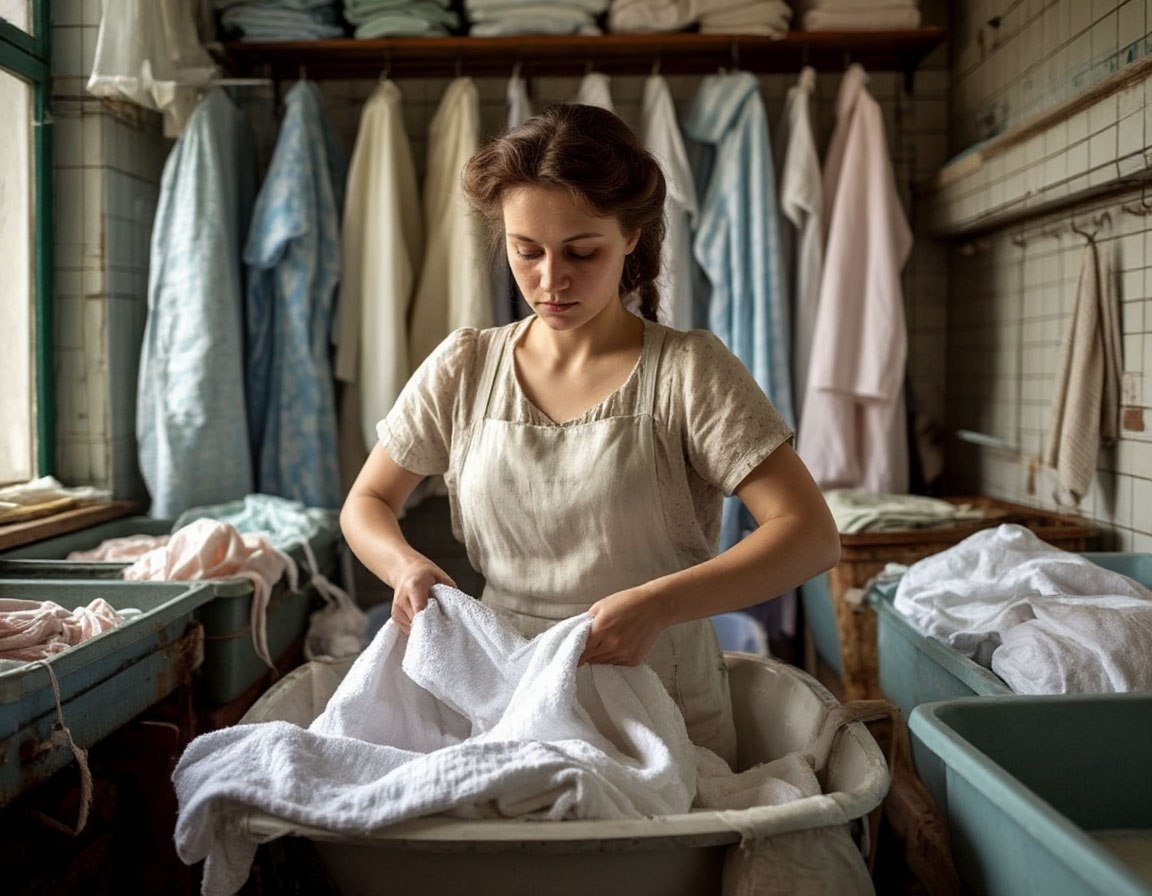
Housewives in the USSR had much fewer laundry care products, but they had many life hacks and even tricks in their arsenal. They helped wash, bleach and even preserve the color of things. In this article, we recall what means were used to wash clothes in the USSR, and also what tricks were used to help care for clothes.
Laundry soap - a remedy for all occasions
Laundry soap is still stored in many homes today, but in Soviet times every housewife certainly had it. With its help, even apartments were insulated - they dipped the fabric in a soap solution, and then pushed it into the cracks. But it was the washing properties of laundry soap that were especially valued, and, of course, its availability in contrast to powders.
Laundry soap in the USSR was made from animal fat - pork, beef, etc. – with the addition of alkali. The result was grayish dark bars with a characteristic odor due to the high fat content, most often 72%. This fat content helped in washing clothes - the high content of fatty acids helps to better fight oil stains.
●Ordinary home washingultimately consisted of two components: laundry soap and a washboard. A win-win option for cotton fabrics and low costs in the form of skinned hands.
●For white linensoaking was required, laundry soap also helped here. It had to be grated, dissolved in hot water and immersed in the laundry for several hours. If this did not help, soda was added to the solution and the laundry was boiled over low heat. Soda in this combination creates an even more powerful alkaline environment and works as an abrasive component. Grease stains didn't stand a chance.
●Delicate fabricscannot be washed using these methods - the item will be damaged. The product is too aggressive; if it comes into contact with hard water, it may react and leave stains.
"News", "Era" and "Luch" - the first washing powders in the USSR
In 1953, a breakthrough occurred in Soviet everyday life - the first washing powder “Novost” appeared. Surprisingly, it was first produced from sperm whale fat.
By the way, this very powder was advertised in the movie “Office Romance” (6+). Novoseltsev suggested washing Lyudmila Prokopyevna’s wine-stained dress with “Novosti.” At that time, the powder had already become synthetic - just like in the West, using modern technologies.
The range of powders grew rapidly. So, by the mid-60s, powders “Era”, “Astra”, “Luch” and others appeared. And in the 70s, the American Tide came to the USSR. Their smell was brightly chemical - they did not immediately begin to add fragrances to such powders.
It was easier to use them - you no longer needed to grate laundry soap. These instructions for use could be read on the packaging of the “News” powder:
●Two tablespoons of “News” are dissolved in 3-4 liters of water at 40-50 degrees. Shedding fabrics are washed in water at 30 degrees, with the addition of 3-4 tablespoons of vinegar.
●The products are immersed in the solution 4-5 times, lightly washed and wrung out. Heavily soiled fabrics are immersed in the solution for 3-5 minutes, the stains are sprinkled with dry powder, lightly rubbed and washed off.
●When washing, do not use other detergents: soap, soda, etc. use a brush, rub vigorously and twist things.
Delicate fabrics could also be washed with such synthetic powders. The main thing is to strictly follow the instructions and add vinegar on time.
What about whitening?
Over time, bleaches also appeared in the USSR. In the 70s, they launched the production of “Whiteness,” known to this day. At first it was produced in glass bottles, but over time they switched to plastic packaging.
In contrast to the chlorine-based “Whiteness”, the oxygen bleach “Persol” appeared at about the same time. These products still had to be used with caution - faded areas appeared on the fabrics every now and then after such washing. However, the same “Whiteness” was added to children’s underwear when boiled.
Life hacks from the USSR
If Persol or powder could not be obtained, ingenuity was used. Here are some life hacks that helped housewives take care of their laundry.
1. Mustard – for delicate fabrics. Powdered mustard was diluted in water and soaked in items made from delicate fabrics. Mustard is believed to break down fat and disinfect.
2. Tea and coffee - to maintain color. Dark items could be soaked in tea and coffee solutions. The fabric was tinted, and with it some faded areas.
3. Gasoline, acetone and much more - for old stains. These products were used to remove old greasy stains. True, the fabric could have melted.
In Soviet times, all sorts of home remedies were used, some today seem not just unusual, but even dangerous. Things of that time most often endured such experiments, but modern fabrics are unlikely to withstand such care.
And why? If there are affordable, effective and technologically advanced means to which you do not need to add either vinegar or soda. For example, laundry detergents from YokoSun brand. The line has everything you need: from universal gels for washing clothes for the whole family to effective and safe bleaches. Fast, efficient and modern!