



.svg)


 Back
Back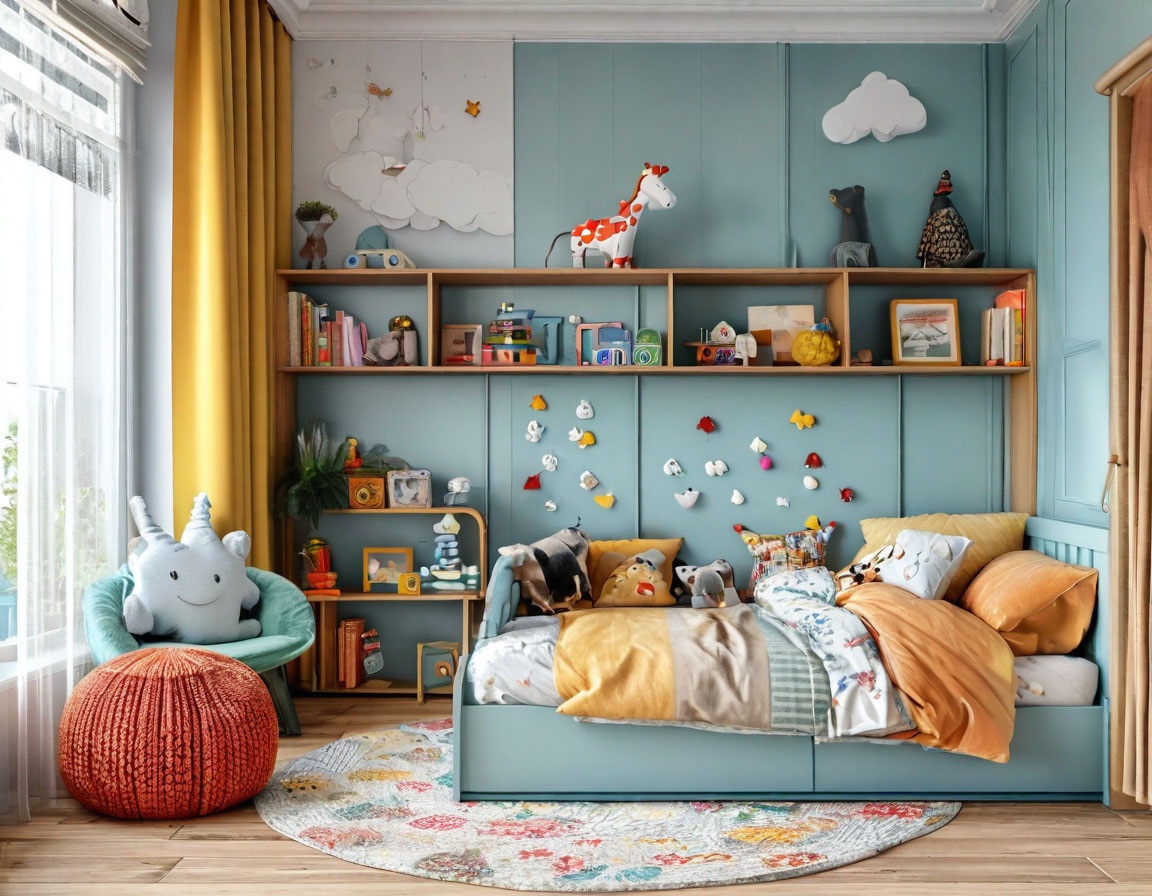
Every parent wants to give their child the best. This applies to literally everything, including the children's room. The interior in which a child grows up to some extent influences his development, both physical and psychological. A children's room is a space in which the baby should feel safe and comfortable, and it is also worth creating a place for relaxation, learning and creativity.
YokoSun has prepared several tips for decorating a children's room, so that the baby's space contributes to his development.
1. Color scheme
The decor of a children's room affects the child. For example, the color scheme can determine his mood. While bright colors stimulate creativity and physical activity, calm shades, on the contrary, calm and relax.
The best option is to combine bright and calm colors in the nursery. For example, red stimulates brain activity, white perfectly reflects light, both solar and artificial, green promotes relaxation. Using a flexible approach to color combinations, you can zone the space. For example, separate an area for relaxation and study: in the first, give preference to calm shades, in the second, colorful colors.
Remember that children's preferences will change over time. If by the age of five the baby loves yellow, this does not mean that after two or three years he will still like this bright color. In the future, it will be easier to replace one or two color accents rather than repaint the entire room.
2. Zoning
Ideally, a children's room should meet all the child's needs and provide space for different activities, depending on the age of the baby. This is, of course, an area for relaxation, storage, creativity and games, and learning. Psychologists say that this approach helps the child concentrate better. For example, while studying, do not be distracted by games, it is better to fall asleep.
All this does not necessarily require a huge space - proper zoning will allow you to arrange even a small room. Stationary shelving that can be used to divide zones, textiles or, again, color schemes will help.
In addition, child psychologists also claim that proper zoning can teach a child to order. It’s even better if he has free access to his own things: the child himself will be able to get them out and put them in their places on his own. Therefore, high shelves can be replaced with floor or open shelving. By the way, unlike bulky cabinets, they will not eat up space.
3. A place for creativity
With zoning, everything is generally clear, but what about the space for creativity? How to arrange this area in an unusual way? We have several ideas.
A child will definitely be delighted if his room has walls on which he can draw with crayons. This is not that difficult or expensive to do. For example, special slate paints are available on marketplaces - they are easy to apply on different surfaces yourself.
You can create a real gallery in your baby’s room by hanging his drawings on the wall. This way, you will involve the baby himself in the process of arranging the room - he will be happy to make his significant contribution.
You can literally create unusual solutions for storing crayons, plasticine, paints and brushes with your own hands. Decorate the jars with your child in different colors or make fancy-shaped organizers from cardboard.
4. Personal space
The child needs personal space. This way he can learn to respect the personal space of others, especially his parents. But not everyone is ready to allow a child to lock himself in his room from an early age; some families may not have enough space for a separate children’s area. An ordinary children's hut can help - it's fun and good for the child's psyche.
Such a house can be purchased ready-made - most often these are so-called children's wigwams. But you can build a hut yourself, together with your child and in a play format. For example, stretching a clothesline in the room and throwing a large sheet over it. Or the old fashioned way - from a blanket and pillows.
Whatever the hut turns out to be, the main thing is that the baby likes it. It can be decorated depending on your mood - with a garland or toys.
5. Safety and cleanliness
A well-designed children's room can save parents from several problems at once: scattered pencils, toys throughout the apartment or house, difficulties falling asleep or concentrating when doing homework. But we must not forget about the safety of the child.
Pay attention to windows and sockets, sharp corners of furniture. Making sure that a child cannot open a window on his own, hit a sharp corner, or open a cabinet with dangerous objects is important throughout the apartment.
In the process of arranging a room, you should also take care of cleanliness. There is no need to allow areas in the room to accumulate dust, which can cause allergies, and in advanced cases even asthma. Therefore, at least once a week it is necessary to carry out wet cleaning in the children's room, and it must be safe - using gentle and hypoallergenic products. Thus, the YokoSun children's room cleaner can be used even in the presence of children, due to its composition without phosphates, chlorine and other aggressive chemicals.
A children's room is a place for relaxation, learning and creativity. By following simple tips, you can create a truly cozy space that will meet all the needs of the child, and most importantly be safe and comfortable.
Recommended reading: