



.svg)


 Back
Back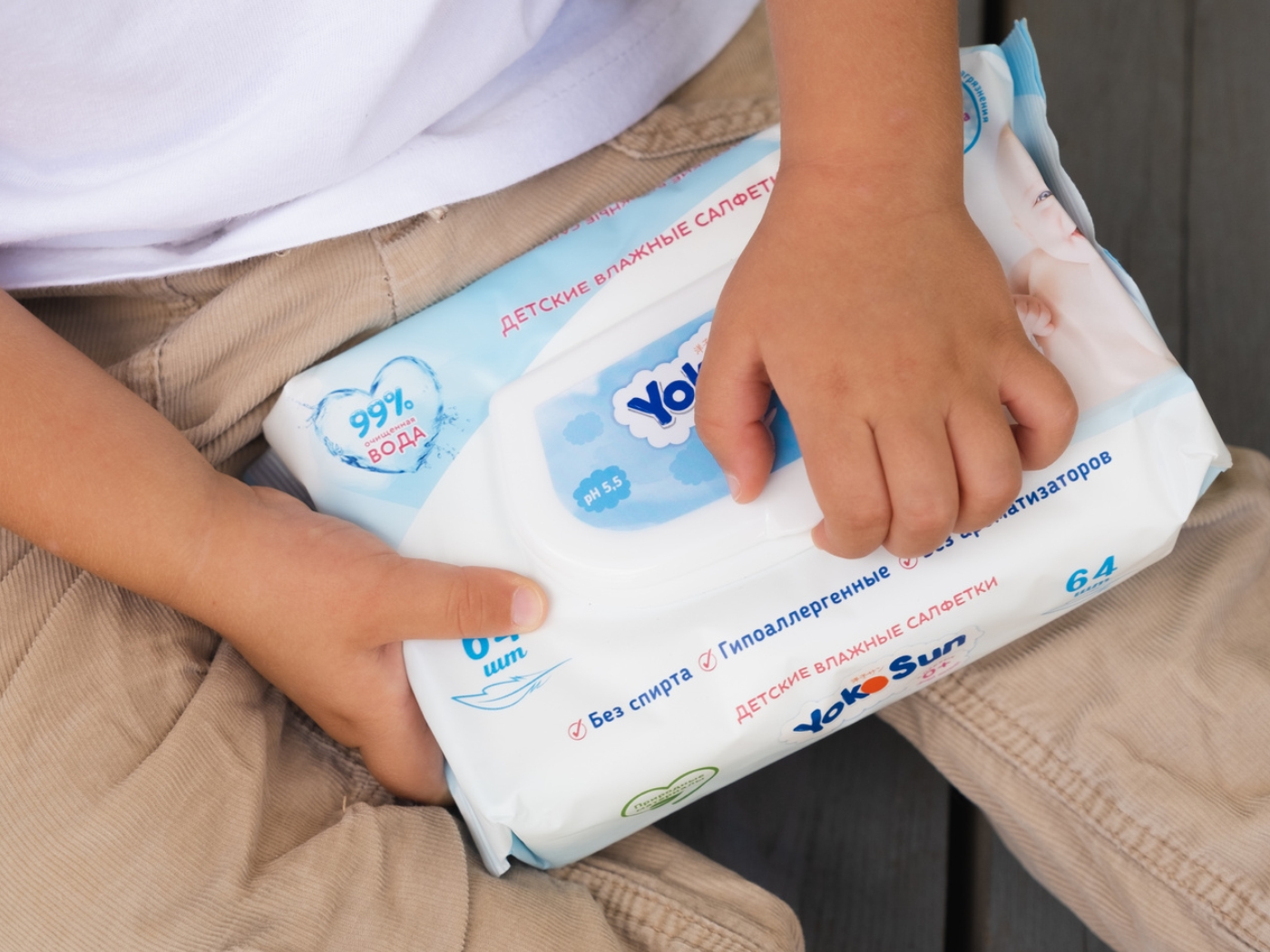
Wet wipes have firmly integrated into our lives - without them, it is at least impossible to imagine any trip. And how many other areas of our lives have been influenced by this invention. But do we know everything about them? In this article we look at seven unexpected facts about wet wipes.
1.Wet wipes were invented 68 years ago
It is believed that they were invented by the American Arthur Julius. In the late 50s, he worked for a cosmetics company and created a machine for dispensing soap. It was at this time, in 1957, that he invented wet wipes, which the public, by the way, did not immediately appreciate.
Arthur originally planned to use wet wipes in the cosmetics industry. But the invention was presented to the public only three years later and for other purposes - public catering. The presentation took place at the National Restaurant Exhibition, and the famous Colonel Sanders was one of the first to appreciate the invention - he bought Julius’s development for his fast food restaurants.
2.Today, wet wipes can last up to 3 years
Today's wet wipes have come a long way from those invented in the last century. Now, for example, they can be stored in packaging for up to 3 years. All thanks to the preservatives in the impregnation - this is literally a must-have for all wet wipes. They prevent the growth of bacteria and fungi in a favorable humid environment.
Once opened, the napkins do not last long - about four weeks under the right conditions. This is at room temperature and the lid is tightly closed. Dry wipes lose their antibacterial properties and can, on the contrary, spread bacteria.
3.The sticky effect on your hands after using wet wipes is a red flag
Have you ever experienced that after using wet wipes, your hands feel sticky, and when you squeeze the wipes, a lot of foam appears? In this case, you most likely dealt with a product whose impregnation contains anionic surfactants. They are also added to washing powders and household chemicals.
It would be more correct to say that anionic surfactants are generally the main ingredient responsible for cleaning in household chemicals. But they are also considered one of the most allergenic and skin-damaging types of surfactants. Therefore, the feeling of soap on your hands after using wet wipes is a red flag, especially when it comes to children's products.
4.Wet wipes are indispensable in space
In microgravity conditions on the ISS, usual hygiene procedures change significantly. Wet wipes here are a key means of personal hygiene: with their help, astronauts cleanse the skin of their face and body, since the use of running water is impossible. The wipes are impregnated with a safe hypoallergenic composition that does not require rinsing. After use, they are sealed and placed in waste containers - this is critical to maintaining sanitary conditions in the closed environment of the station. In addition, wipes are used to treat surfaces: they wipe equipment panels and work areas, preventing the accumulation of dust and microorganisms.
5.A raised pattern on the canvas of wet wipes is not marketing
Have you noticed the raised pattern on wet wipes? This one, for example, in the shape of a honeycomb, is found on the canvas of YokoSun wet sanitary napkins. This is not just an element of decoration or marketing, but a completely functional solution.
The fact is that such a pattern helps to better collect and retain dirt, it seems to create additional points of contact with the surface, improving cleaning properties. And the porous structure of the fibers retains moisture so that the impregnation does not spread over the surface or on the skin.
6.Cleaning with antibacterial wet wipes really reduces the number of bacteria on surfaces
Antibacterial wipes can effectively help in cleaning rooms. Studies have shown that they have been proven to reduce bacterial load.
Scientists examined, in particular, keyboards in a veterinary hospital. Their regular cleaning with antibacterial wipes led to a noticeable reduction in bacterial contamination - up to 90%. Agree, it’s a good replacement for a regular damp cloth in the house.
7.All wet wipes are different
Wet wipes from different manufacturers can differ dramatically. These are different non-woven fabric materials - plastic or organic components. Different composition of impregnation (in addition to the main component, water). Ultimately, the differences may not just be noticeable - you can literally feel them on your skin.
Therefore, it is important to choose products taking into account the composition, labeling and purpose of use. For example, products without fragrances, anionic surfactants and parabens are better suited for the skin - this reduces the risk of allergic reactions and irritations. For the delicate skin of children, products that contain predominantly purified water, without fragrances and stickiness, are better suited. And for the hygiene of sensitive areas - wipes with pH values close to the skin.
Just such, gentle and attentive to different needs, wet wipes can be found in the line of products YokoSun. Wherever you go, your skin will remain clean, and most importantly, without irritation and dryness.