



.svg)


 Back
Back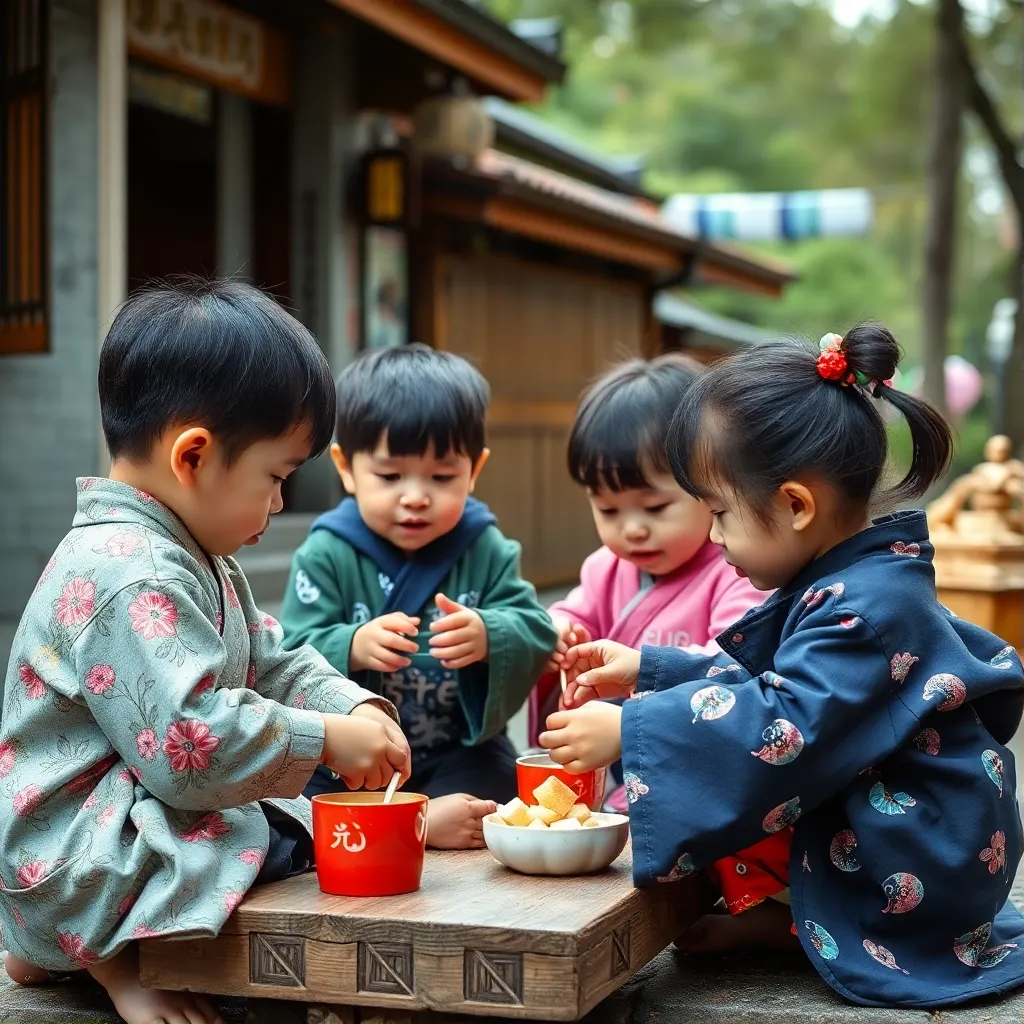
The Japanese are considered one of the most disciplined nations. Often their strict rules surprise and even amaze. For example, in Japan it is not customary to talk on public transport or hug in public. These and many other unwritten laws are strictly observed. This is because the Japanese learn discipline from an early age - both at home and at school.
YokoSun talks about the basic principles of raising children in Japan: from the art of shizuke (discipline) to the system of shokuiku (food education).
Eliminates seven diseases and brings seven virtues
Discipline in Japan is manifested in many behavioral habits, one of which is a total commitment to hygiene. The Japanese gargle after walking, but you shouldn’t even worry about washing your hands often. It was in Japan that “smart” toilets, those with a bidet function, became widespread (the development, by the way, belongs to American inventors). Why, public baths – sento – are still considered centers of social activity in the Land of the Rising Sun.
Many Japanese traditions of hygiene rules are rooted in the history of the country. The customs are believed to have come to Japan with Buddhism in the 6th century. His teachings say that bathing removes seven diseases and brings seven virtues. And the Japanese, as you know, honor traditions and carefully pass them on from generation to generation. That is why strict rules of personal hygiene begin to be instilled in children from an early age.
Children are taught hygiene skills in the lower grades of school. There are even special lessons where children are taught how to properly wash their hands and gargle. It is these procedures that are believed to prevent colds and poisoning. Therefore, Japanese schoolchildren are taught to do this both at home and at school. Moreover, special hygiene checks are carried out in Japanese educational institutions. Teachers check that children have taken handkerchiefs, masks, and have their nails cut. Thus, simple hygiene procedures become a useful habit for the Japanese from an early age.
You've probably heard that there are practically no trash cans in Japan, while Japanese cities are considered one of the cleanest in the world. Mystery? No, it’s simple - it’s customary to take the trash with you. For example, after the 2018 FIFA World Cup in Russia, the Japanese became famous throughout the world when fans of the national team removed garbage from the stands after each match. The fact is that the habit of careful attitude towards cleanliness in public spaces is also instilled in them since childhood.
This is also systematically taught in schools. For Russians, there is nothing surprising here: children in Japanese schools clean classrooms and corridors on their own. This cleaning takes place daily and takes approximately 15 minutes. True, the Japanese went further: in addition to the fact that participation in cleaning is mandatory, children must clean both toilets and bathrooms. This is how the Japanese believe that schoolchildren are taught that literally everyone is responsible for the cleanliness of public spaces.
Shizuke means discipline
Some people may find the rules of upbringing in Japan too strict. Foreigners who often come to the Land of the Rising Sun consider local children to be too calm. And indeed: a child crying loudly in a public place is rather a rarity.
You will be surprised, but this is far from a matter of severity, much less punishment. And in the way a child is raised literally from birth. And here many things are intertwined: traditions, public opinion, and culture.
Japanese mothers literally do not leave their child’s side, especially in the first two years of his life. Parents who spend weekends without their children, or even go to the cinema without them, are considered to be doing their job poorly. Thus, according to some studies, Japanese mothers spend on average 2 hours a week away from their children (we are talking about children under two years old). At the same time, they are not inclined to indulge all the child’s whims and often distance themselves, showing the child that he is a separate person.
How exactly do Japanese parents cope with the whims of their children? Usually children are scolded in private and extremely quietly. Thus, two principles are observed at once. Firstly, it does not cause inconvenience to others, and Japanese children begin to understand from an early age how important it is to think about others. Secondly, this approach does not affect the child’s self-esteem, as if he were scolded in public.
Social discipline enters the life of a Japanese quite early. In all social groups - family, kindergarten, school class and clubs - children are taught to follow rules and be obedient. It is believed that thanks to this, the child gains the skills of self-regulation and control of his emotions.
Shokuiku or how children are instilled with the aesthetics of proper nutrition
Japanese children become familiar with the food traditions of their country early. Rice, tofu, fish and seaweed are eaten from an early age in Japan. The child begins to eat solid food at approximately 5-6 months after appropriate examinations by doctors. Then traditional food is gradually introduced into the children's diet.
Moreover, it is believed that it is better to prepare food for the baby yourself - this is how parents show their love. For babies, watery rice porridge, shredded tofu, or finely chopped Japanese noodles are prepared. Interesting fact: some parents give up spoons and feed their children with their hands. Over time, the child will be taught to hold chopsticks; for the youngest, Japanese manufacturers have developed a lightweight version - plastic or bamboo chopsticks connected to each other.
Kindergartens in Japan provide meals served in lunchboxes. The dishes are balanced and nutritious; rice is always served with them. By the way, it is believed that Japanese children are unpretentious when it comes to food: they will happily eat seaweed or even boiled radish.
Japanese schools also provide lunches, which become a full-fledged part of education in matters of eating habits - shokuiku is a mandatory part of the school curriculum. Firstly, as in kindergartens, food in schools is balanced and prepared only from fresh ingredients (no freezing). Thus, children are taught that they need to eat based on the principles of strengthening physical and mental health. Secondly, children are taught gratitude for the fact that food reaches their table. To achieve this, schools are introducing catering duties. Children are involved in organizing lunches. First, they select those on duty who will serve and serve food, and then carefully remove the dishes and packaging.
During lessons, children are told where food comes from: how they catch fish, grow vegetables and rice. Explain what Japanese traditional cuisine consists of. Some schools even have their own small gardens, where children can see in practice how hard people work to get their food.